[01]
Containment first
Flame paths, joints and fasteners are treated as one protection system—designed to contain an internal ignition and prevent flame transmission.

 ExECEXPLOSION PROOF
Flameproof equipment does one serious job: it keeps an ignition inside the enclosure from becoming an event outside it. Every decision begins there.
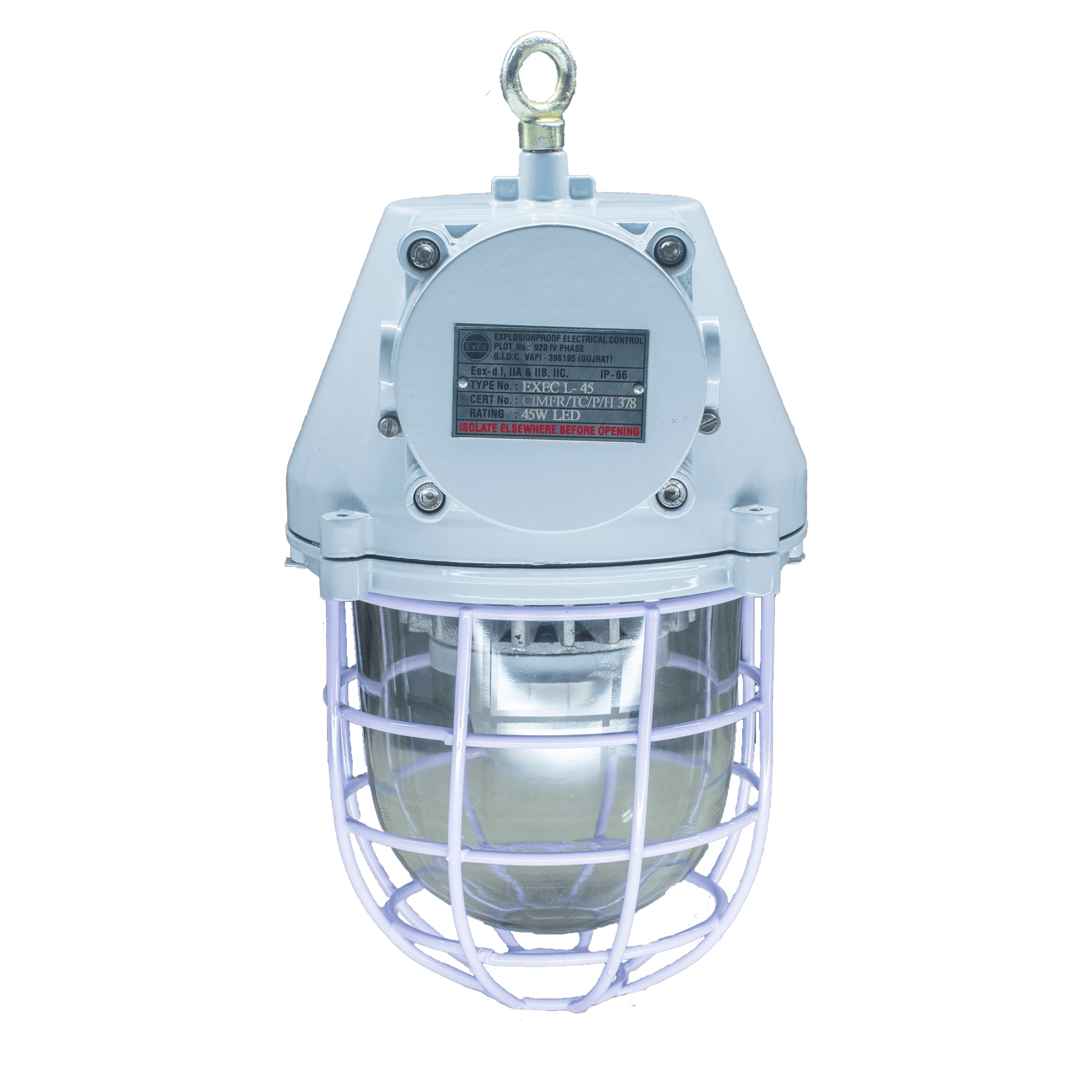
A hazardous-area product is only as dependable as the decisions behind its smallest interface. We begin with the application, then work inward—from the atmosphere and operating load to the enclosure, entries and assembly.
That discipline applies whether the requirement is a standard fitting, a junction enclosure or a complete flameproof control panel.
Flame paths, joints and fasteners are treated as one protection system—designed to contain an internal ignition and prevent flame transmission.
Sealing, cable entries and enclosure geometry are considered together so dust and water protection supports long-term equipment reliability.
Loads, ambient conditions and surface temperature limits inform the selection instead of being checked only after the enclosure is complete.
 FROM SINGLE ENCLOSURES TO COMPLETE CONTROL AND INSTRUMENTATION PANELS
A direct engineering conversation keeps the specification connected to the final equipment.
Temperature, dust, water, corrosion, maintenance access and operating duty all shape the right specification. The real environment belongs in the engineering conversation.
Lighting, control and connection equipment for classified process areas where robust containment is essential.
Equipment selected around gas group, corrosive exposure, washdown and the realities of continuous process operations.
Hazardous-area solutions for solvent handling and production spaces where cleanability and dependable sealing matter.
Practical flameproof equipment for utilities, material handling, coatings and other demanding industrial environments.
Share the zone, gas group, load, quantity or drawing you already have. We will help define the next step.
Talk to engineering